Wet Springs, Hot Attics, and the Crawlspace You Forgot: A Field Guide to Your Home's Smelliest Square Footage
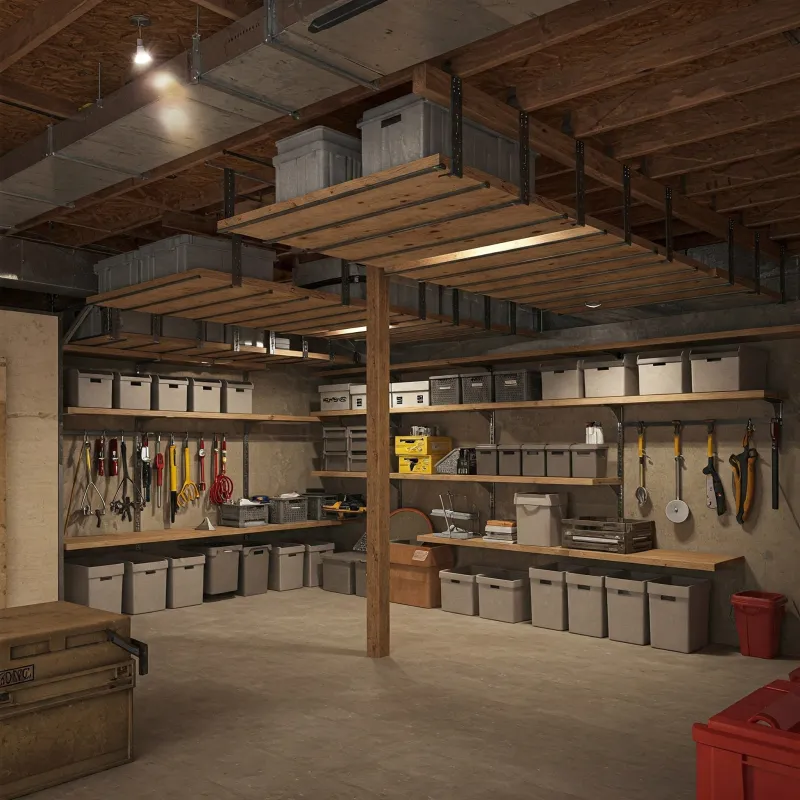
Photo: dim unfinished basement with storage boxes and flashlight beam, via images.squarespace-cdn.com
Every house has them: the rooms you'd rather not enter, the hatches you'd rather not open. And every one of them has a smell. Not a vague, generic smell — a specific, diagnosable odor that's telling you something about moisture, airflow, or damage you haven't found yet.
We're taking the tour. Grab a flashlight.
The Basement After a Wet Spring: That Damp-Cardboard Funk
If you live anywhere east of the Rockies, you know the drill. Snowmelt, then April thunderstorms, then May rain, and suddenly your basement smells like an old library that lost an argument with a swimming pool.
That smell is mildew off-gassing — microbial volatile organic compounds (MVOCs) produced by mold colonizing anything porous: cardboard boxes, drywall paper, that sectional you swore you'd reupholster. Here's the thing most people miss: if you can smell it, it's active. A musty basement in June is a moisture problem wearing a costume.
What the smell reveals: Water is entering somewhere — foundation seepage, a clogged gutter dumping water at the slab, or condensation on cold pipes. The smell is your early-warning system.
What actually works down there: Low-airflow basements defeat most plug-in fresheners, which just perfume the problem. You need three things in order: a dehumidifier sized for the space (aim for 40–50% relative humidity), a real moisture absorber like calcium chloride tubs in corners and closets, and an activated charcoal or zeolite-based odor eliminator, which physically adsorbs odor molecules instead of masking them. Skip anything with a strong fragrance — mixing perfume with mildew just gives you perfumed mildew.
The Attic in August: Hot, Stale, and Suspiciously Sweet
Attics don't get musty the way basements do — they get baked. An attic at 130°F in July cooks everything up there, and in late summer you'll notice a hot-plastic, stale-wood smell that intensifies every afternoon.
Sometimes that's just heat off-gassing from tar paper and stored holiday bins. But a persistent sweetish or ammonia-tinged smell deserves attention: it can mean pest activity (squirrels and mice are attic regulars), and a urine-soaked insulation patch is a smell generator that will haunt your HVAC for years.
What the smell reveals: Ventilation failure, mostly. Ridge vents blocked by insulation or bird nests trap superheated air, and trapped air concentrates every odor in the house's least-visited room.
The fix ladder: Clear the vents first. Then, for lingering odors, use a high-capacity activated carbon unit or odor-absorbing bags hung near the problem zone — heat actually helps charcoal work faster. Never spray anything in an attic; 130-degree enclosed spaces and aerosols don't mix.
The Crawlspace Nobody Has Entered Since the '90s
You know the one. The access panel painted shut in 2004. The space under the kitchen where your dad "took a quick look" during the Clinton administration.
Crawlspaces have the most distinctive smell profile in the house: an earthy, mineral, slightly rotten odor that rises through your floors on humid days. That's because most crawlspaces in the US are vented, and in humid southern and mid-Atlantic states, those vents do the opposite of their job — they pull in moist summer air that condenses on cool joists. Add dirt floors, and you get a slow-cooking mold and soil-gas cocktail.
What the smell reveals: If it's earthy and damp, moisture intrusion. If it smells like rotten eggs, you may have a plumbing issue or sewer gas pathway — that one warrants a pro, not a deodorizer.
Realistic moves: A vapor barrier (heavy plastic sheeting over the dirt) transforms a crawlspace faster than anything else. After that, commercial-grade moisture absorbers and carbon-based odor packets handle the residue. This is not a candle-and-hope situation.
Your Seasonal Odor-Crushing Checklist
- Early spring (March–April): Basement inspection before the rains. Check gutters, run the dehumidifier, set fresh calcium chloride tubs, and replace any charcoal units that have been working since last year.
- Early summer (June): Crawlspace check while it's still dry enough to crawl. Look for standing water, torn vapor barriers, and pest entry points.
- Late summer (August): Attic day — but do it at 7 a.m., not 3 p.m. Clear vents, sniff-test insulation, and hang fresh carbon bags.
- Fall (October): Close up shop. Seal crawlspace vents in cold climates, verify downspouts before freeze, and do one final whole-house sniff test while windows can still open.
The Nose-Blind Warning
Here's the trap: you've smelled your basement every day for a decade, so you don't smell it anymore. Your guests do. The one-minute test — open the door after being away for a weekend and take one honest breath — tells you more than any product review ever will.
Odors in these forgotten spaces aren't just unpleasant; they're data. Crush the smell, and you've usually fixed the moisture, the ventilation, or the leak that caused it. That's the whole game: find what the smell is telling you, then crush it.