Your Grandma's Basement Wasn't Always Musty: How Storage Rooms Become Smell Time Capsules (And How to Crack Them Open)
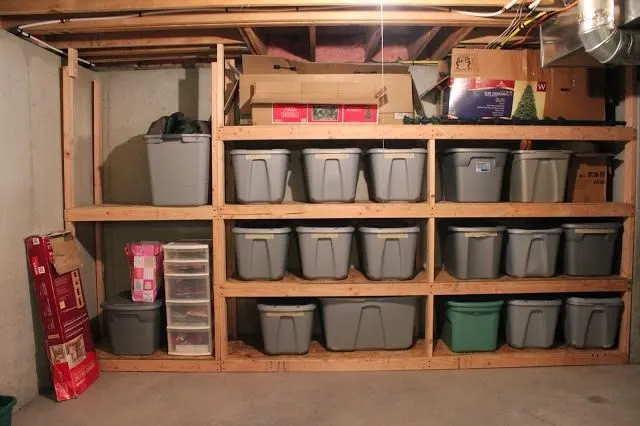
Photo: dim unfinished basement storage boxes musty, via i.pinimg.com
Every family has one. The basement that makes you hold your breath on the stairs. The attic where the air feels thick enough to chew. The storage room nobody opens because opening it means admitting what's in there.
Here's the thing nobody tells you: that smell isn't permanent. It's not structural. It's not just "old house character." It's the residue of decades of decisions — every cardboard box, every fabric keepsake, every small leak nobody chased down. And unlike your grandmother's china, it's fixable.
Why Forgotten Spaces Smell Like 1974
Storage areas become odor time capsules for three reasons: darkness, stillness, and moisture. Take those away and most of the smell goes with them.
Cardboard is the main offender. Boxes are made of processed wood pulp, which off-gasses lignin as it breaks down. That's the "old book" smell — pleasant in a library, suffocating when it's 40 years of accumulated boxes. Worse, cardboard is hygroscopic, meaning it drinks ambient moisture and holds it against everything inside.
Fabrics are the accomplice. Wool blankets, upholstered furniture, prom dresses in garment bags — textiles absorb every volatile compound in the room and slowly release them back. A sofa stored in a damp basement doesn't smell like itself anymore. It smells like the basement.
Moisture is the engine. Even a foundation that "seems fine" wicks humidity through concrete. Concrete is porous — it's basically a sponge with a facade. That chronic low-grade dampness feeds mildew in places you'll never see: behind drywall, under carpet squares, inside the box spring from 1988.
The Three-Pile Sort: Toss, Treat, or Keep
Before any product touches this room, you have to make hard choices. Everything that comes out of storage gets sorted into three piles:
Toss: Any cardboard box that's soft, stained, or smells like a basement — the box itself is contaminated and will re-infect the room. Same for anything with visible mold on fabric, anything that's been sitting in standing water, and that mysterious box of electronics cords "in case we need them." You won't.
Treat: Hard-surface items (plastic bins, metal shelving, tools), washable textiles, and solid wood furniture. These can be cleaned and saved.
Keep as-is: Sealed plastic totes, glass, ceramics, photos in archival sleeves. If it's non-porous and sealed, it's fine.
Resist the urge to treat sentimental items gently out of guilt. A cedar chest that reeks of mildew will make the whole room smell like mildew forever. Clean it or lose it.
Room-by-Room Rescue Plan
The Basement
Start with a shop vac and a dehumidifier — the dehumidifier is non-negotiable and should run continuously for at least two weeks. Target 50% humidity or lower. Sweep or vacuum every surface including ceiling joists, then wash hard floors and walls with a mix of water and an enzymatic cleaner. Enzymes actually digest the organic compounds causing mustiness instead of just covering them — this matters, because a pine-scented basement is still a basement.
For lingering smells in unfinished concrete, an odor-absorbing treatment like a activated charcoal paste or a specialized concrete sealer with odor-blocking properties can lock down what's soaked into the slab. Place charcoal bags or odor-absorbing buckets around the room afterward for passive, ongoing defense.
The Attic
Attics are usually dry — their problem is heat, which bakes odors into insulation and stored items. Replace any insulation that shows rodent activity (mice urine has a staggeringly persistent smell). Replace cardboard with sealed plastic bins, and tuck odor-absorbing gel containers or charcoal pouches into the bins themselves. Ventilation matters more than products here; many attics benefit from simply adding soffit or roof vents.
The Storage Room / Closet
The indoor villain. Empty it completely, wash walls and shelves, and — this is the step everyone skips — pull up any carpet and check the padding underneath. Sub-floor padding is a mold hotel. Replace it if there's any doubt. Then restock with plastic bins, add a small odor-absorbing unit or gel canister, and crack the door occasionally to let it breathe.
What Actually Works on Decades-Old Smells
Cut through the marketing: there are really only four categories worth your money.
- Enzymatic cleaners — best for organic odor sources (mildew, pet accidents, musty textiles). They break down odor molecules instead of masking them.
- Activated charcoal — the workhorse. Cheap, passive, effective on ambient air. Buy bulk bags, not cute individual pouches if you're doing a whole room.
- Odor-absorbing gels and solids — good for enclosed spaces like closets and totes, where they work slowly and steadily.
- Ozone generators — the nuclear option for severe cases. Effective, but rooms must be empty of people, pets, and plants during treatment. Do your homework before renting one.
What doesn't work: plug-in air fresheners, scented sprays, or "odor-neutralizing" candles in a room with an active moisture problem. You're putting perfume on a leak.
Keeping It From Coming Back
Once the room passes the sniff test — and give it a real test, with the door closed overnight — maintenance is simple: keep humidity under control, swap cardboard for sealed bins, refresh charcoal bags every few months, and do one honest walk-through each spring. Ten minutes a year beats another decades-long fermentation project.
That basement can smell like 2025 again. It just has to want it — and now, so do you.